The Knock on the Door: Why We Still Answer the Phone Like It's 1995
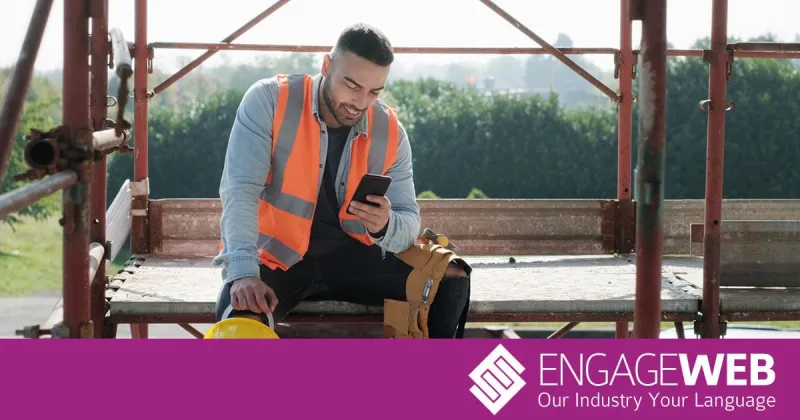
Photo: tradesman answering mobile phone on building site UK, via www.engageweb.co.uk
There's a moment that happens most weeks in this house. The phone rings, someone's hands are covered in whatever the morning's job has left on them, and there's a mad scramble to get to it before the answerphone kicks in. Dad still moves fastest. Forty-odd years of practice, apparently.
We've never lost the habit, and we've never wanted to. But lately I've been thinking about why — because everywhere else you turn, actually speaking to a person is becoming something of a luxury.
The Great Escape from Human Contact
You know how it goes. You ring a company — an energy supplier, a broadband provider, take your pick — and you're greeted by a recorded voice with a name like 'Sam' who is very sorry but all operators are busy. Press 1 for billing. Press 2 for enquiries. Press 3 to hear the options again because you weren't quick enough the first time.
Somewhere along the way, big business decided that talking to customers was a cost to be engineered away. Chatbots that can't answer a straight question. Web forms that vanish into the void. 'We'll get back to you within five working days' — which in practice means never.
And look, I understand the economics. If you've got ten thousand customers, you can't have someone picking up every call. But here's the thing: we haven't got ten thousand customers. We've got a few hundred, and we know most of their names, their dogs and which gate sticks.
What a Familiar Voice Is Actually Worth
When Mrs Ellery rings about a dripping tap, she doesn't want a ticket number. She wants to know that we know which house is hers, that we remember the job we did last autumn, and that someone sensible will be round soon.
That's not nostalgia. That's information. Every phone call we take carries details no form would ever capture — the 'while you're here, the back door's been catching' asides, the 'don't mind the dog' warnings, the 'my husband likes to be shown what you've done' requests. That's the difference between a job done and a job done properly.
There's a quiet trust in it too. Customers tell us they ring back because it's us. Not because we're the cheapest — there's always someone cheaper — but because they know who'll turn up and what they'll be like when they get there. You can't build that through a chat window.
Anatomy of a Two-Minute Phone Call
Here's a rough breakdown of what happens in the average couple of minutes on the line:
- First 20 seconds: Who's this, what's the problem, where are you? Usually we've already placed the road and half the house.
- Next minute: The actual story. When it started, what it sounds like, what's been tried. Half the time this narrows down what we need to bring — the right part, the right ladder, the right wet-weather kit.
- Last 40 seconds: Sorting the when. We'll say roughly when we can come, agree a window rather than a vague 'sometime Thursday', and flag anything that might change the job.
Two minutes. And in that time we've usually avoided one of two disasters: a wasted trip because we didn't bring the right kit, or a wasted visit because it turned out to be a five-minute fix the customer could handle themselves with a bit of guidance. We've told people that over the phone before — no charge, no visit, see you next time. It costs us a job that day and earns us the next three.
Try getting that from a chatbot.
What Small Firms Lose When They Copy the Big Boys
I notice more small firms going the same way. Automated booking systems. 'Please use the online portal.' I get why — it looks professional, and after a long day on the tools it's tempting to let a machine sort the diary.
But a small firm's whole advantage is being small. The moment you put a robot between you and your customer, you're competing with the big companies on their terms — and they've got deeper pockets and better robots. Our terms are simpler: you ring, we answer, we come, we sort it.
There's also the matter of what the phone does for us. Half our work comes from people who've been recommended by a neighbour, ring up, and make their mind up in the first conversation. A friendly, knowledgeable voice is the best advert we've got. A form is not an advert. A form is a shrug.
We're Not Perfect, But We Do Pick Up
To be clear, we're not running a call centre. Sometimes we're up a ladder, sometimes we're under a sink, sometimes the signal's gone on the ring road. Leave a message and you'll get a ring back — usually the same day, always the same voice.
But the principle holds. When someone's got water coming through the ceiling, they don't want to 'submit a ticket'. They want a person, a plan and a time. That's what we'd want too.
So if you ring BJ & H and it's answered on the second ring by someone who asks after the garden, that's not by accident. That's the whole business model, really. It just doesn't fit neatly on an invoice.