Five Minutes on the House: The Work That Never Makes It Onto the Invoice
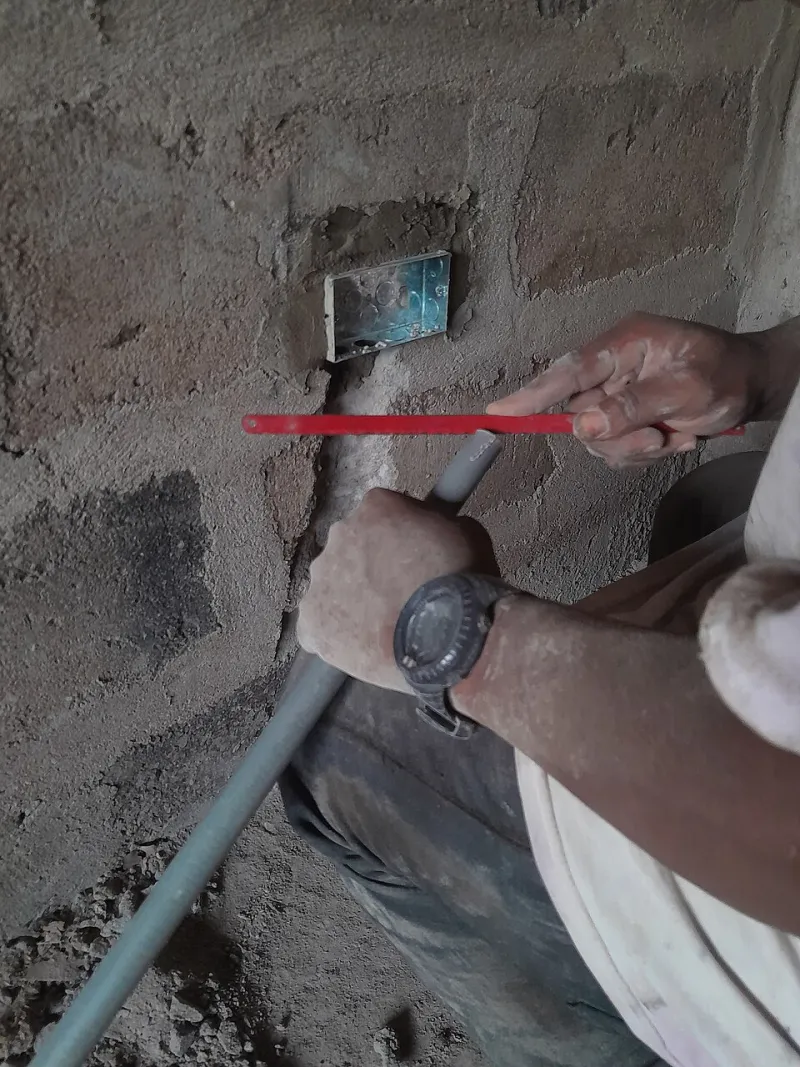
Photo: Korbla Johnny, CC BY-SA 4.0, via Wikimedia Commons
Every trade firm has an invisible job list. Ours lives in the gaps between the real work — the five minutes here, the ten minutes there, the little fixes done while the kettle boils. None of it gets written down, none of it gets invoiced, and honestly, that's the point.
The Stopcock That Started This Train of Thought
A few weeks back we were finishing up a bathroom job over in Loughborough. As we were packing the van, the customer mentioned — almost apologetically — that the stopcock under the stairs had been stiff for years and she'd never got round to it.
Two minutes with an adjustable spanner and a rag, and it turned like new. She offered to pay. We said no thanks, and meant it.
Now, you could argue that's two minutes of billable time we've given away. Multiply it across a year and it adds up to real money. But that's looking at it the wrong way round, in our view. What you're actually buying with those minutes is something no amount of advertising spend can produce: a customer who tells her neighbours, without any prompting, that we're the real deal.
What We Actually Give Away
It's worth being honest about the scale of it, because it's not nothing:
- Tightening things — hinges, handles, radiator valves, that one wobbly gatepost
- Looking at things — "while you're here, does this damp patch worry you?" costs nothing to answer
- Adjusting things — a door that's dropped since we last came, a cupboard catch that won't click
- Explaining things — talking a customer through what a quote means, or what they could safely tackle themselves
None of it is skilled labour in the sense that it takes a qualification. All of it is skilled labour in the sense that we know what to look for and how to fix it without breaking anything else. That knowledge took years to build, and sharing a slice of it costs us nothing but time.
Why Not Just Charge for It?
We've thought about it, believe me. Plenty of firms do — some itemise every last minute, and there's an argument that a fair day's work deserves a fair day's pay, full stop.
But here's the thing about small jobs: the overhead of charging for them often outweighs the job itself. Writing up an invoice for a two-minute fix, posting it, chasing it — you'd spend more time on the paperwork than the work. And asking a loyal customer for a tenner because you rehung their gate on the way out just feels wrong. It turns a relationship back into a transaction, and relationships are the whole reason a family firm survives.
There's a simpler truth underneath it too. My dad taught me this trade, and his rule was always: leave a place better than you found it, even if "better" only means a hinge that doesn't squeak. That's not a pricing strategy. It's just how you'd want to be treated in your own home.
The Long Game Nobody Advertises
The big national firms can outspend us on marketing a hundred times over. They can't out-give us on a Tuesday afternoon when a customer mentions a sticky window latch in passing.
Because here's what happens to those five minutes. The customer remembers them. Not consciously, necessarily — but when their neighbour asks "do you know anyone decent?" or when they need a bigger job doing next spring, we're the firm that fixed the stopcock for nothing. Word of mouth in a town like ours is built entirely out of moments like that, strung together over years.
It's also, if we're honest, a bit of a filter. If a customer is the type to demand payment for every scuffed skirting board and invoice us for a broken cup of tea, the relationship was never going to work anyway. Generosity tends to attract generosity. We've found the people who appreciate a free fix are the same people who pay on time, recommend us freely, and leave the light on when we're working late.
Small Print, Large Heart
To be clear, this isn't a marketing gimmick we've reverse-engineered. We don't do free extras to create a debt. We do them because a job isn't finished when the invoice is right — it's finished when the customer's home is genuinely sorted.
If you ring BJ & H for a job, you'll get a fair quote and honest work. And if we notice something small on the way out, you'll probably get that sorted too — no line item required. We figure the reputation looks after itself.
And looking at the last twenty-odd years, we reckon it has.