The Last Look Back at the Door: Why the Little Things Tell You Everything
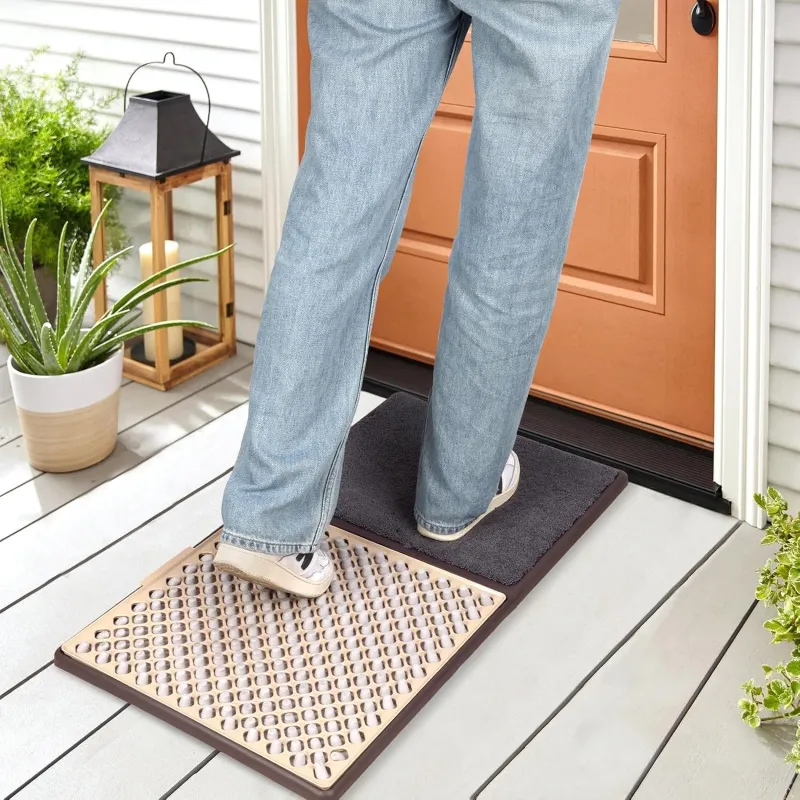
Photo: tradesman wiping boots on doormat outside house entrance, via m.media-amazon.com
There's a moment at the end of every job that nobody photographs for the website. The tools are back in the van, the kettle's been returned to its rightful place, and one of us pauses at the front door for a final look back down the hallway. Is the hallway runner straight? Is there a boot print on the mat? Did we leave the porch light how we found it?
We call it the last look back, and honestly, it's the most important thirty seconds of the whole job. Not the tiling, not the wiring, not the paintwork — those matter, obviously. But trust between a family and the people they've let through their front door is built in moments far smaller than anyone admits.
The Quote Gets You In. The Habits Keep You There.
A homeowner choosing a tradesperson usually judges on two things: the price and the patter. That's understandable — it's the information in front of you. But here's the thing we've learnt after decades of doing this: the quote tells you very little about how a job will actually feel to live through.
What tells you everything is the small stuff. Does the van pull up without parking across your neighbours' drive? Do the dust sheets go down before a single tool comes out of the bag? Is the radio off, or low, or asked about first?
None of these things appear on an invoice. All of them appear in a customer's memory.
Boots Off, Wipes Out
Take wiping boots. It sounds almost comically small — the kind of thing your nan nags you about. But if a tradesperson can't be bothered with a door mat, what else are they shrugging at? The habit isn't really about mud. It's about whether someone sees your home as a workplace to be respected or a workplace, full stop.
The same goes for dust sheets. There's a world of difference between a job that's tidied at the end and a job that's kept clean as it goes along. The second one takes more effort and shows more pride. It also means that if you need to pop to the kitchen mid-job, you're not stepping over chaos to get there.
We've had customers tell us they chose us because a previous tradesperson left a ring on their coffee table with a mug. A ring! But we understand it. That ring said: I'm not really seeing your home. I'm seeing a site. Once someone's thinking that way, the bigger lapses usually follow.
The Habits You Can't Fake for Long
Here's the good news for homeowners: these habits are hard to fake. A slick salesperson can rehearse a pitch. They can't rehearse the instinct to move your grandmother's china before starting work, or to sand a door edge they didn't strictly need to touch because it was catching and they happened to notice.
Carefulness is a character trait, not a procedure. It shows up in a hundred tiny decisions made when nobody's watching — or more accurately, when nobody's supposed to be watching. The tradesperson who tidies up before they're asked, who flags a small problem before it becomes a big one, who texts to say they're running ten minutes late — that's the same instinct showing up again and again.
And the reverse is true. The person who's careless with your hallway is usually careless somewhere else too. It just hasn't shown itself yet.
What to Look For Beyond the Quote
So if you're comparing quotes and trying to work out who to let loose on your house, here's our honest suggestion: pay attention to the first ten minutes, not the final figure.
- Did they arrive when they said they would, or at least ring ahead if not?
- Did they look properly at the job before pricing it, or glance and guess?
- Did they treat your questions as reasonable, or as a nuisance?
- Did they mention how they'll protect the area around the work?
None of that guarantees perfect work — nobody's perfect, us included. But it predicts it far better than a spreadsheet ever will.
Why We Bother
We're a family firm. When we finish a job on your street, we'll likely drive past that house again next week. We might be working two doors down next year. Our name is on the van, and the van parks outside our own house every night.
That's the real reason for the last look back. Not marketing — accountability. When the people doing your job live twenty minutes away and see your neighbours at the shop, the standard takes care of itself.
So yes, we'll keep wiping our boots, laying our sheets, and having one last look at the door before we go. It costs us nothing. And from where we stand, it's worth more than any advert we could ever buy.