Nine to Eleven, Not Nine to One: The Quiet Discipline Behind a Tight Time Slot

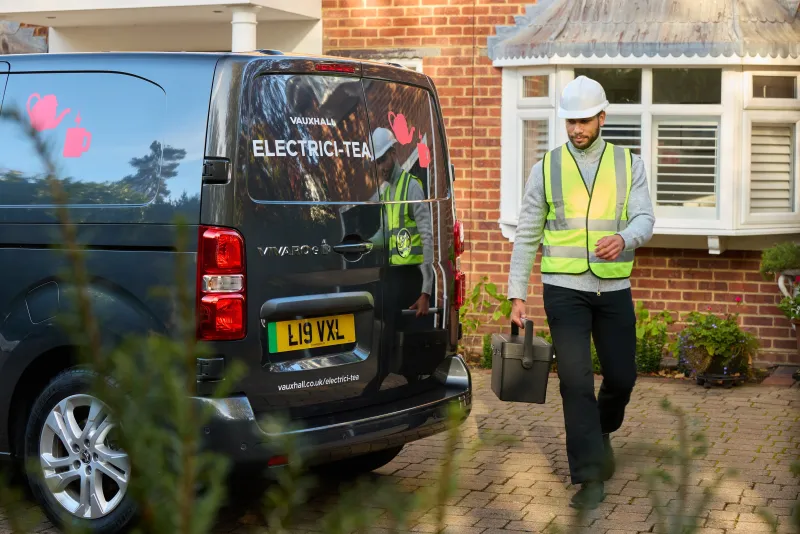
Photo: tradesman van morning street uk suburban, via digitaltradies.com
You've had the text before, haven't you? 'Your engineer will arrive between 8am and 12pm.' Half your morning, gone. You can't pop to the shop, can't start anything, can't really plan anything. You just sit, kettle on standby, listening for a van that might turn up at any point across four hours.
We've always thought that's a poor way to treat people. So at BJ & H, we give two-hour windows — often tighter — and we stick to them. It's not magic and it's not luck. It's a fair bit of unglamorous work behind the scenes, and we reckoned it was worth pulling back the curtain on.
Why the Big Firms Love a Four-Hour Window
Let's be fair to the nationals for a moment. When you're routing hundreds of engineers across a whole county from a call centre two hundred miles away, a four-hour window is the only honest promise they can make. They don't know the roads. They don't know that the A-road backs up at half eight because of the school run, or that the customer on the edge of the village has a track that eats vans alive.
So they hedge. They widen the window until the promise can't be broken — and in doing so, they push all the waiting onto you.
We're a family firm. We know our patch street by street, and that knowledge is worth more than any routing software. It means we can promise something tighter and mean it.
What Actually Goes Into a Two-Hour Promise
It starts the evening before. Jobs get sequenced geographically, not just chronologically — there's no sense sending someone from one end of the patch to the other and back again before lunch. We think about traffic patterns, parking, whether a job might overrun, and where the sensible gap for a brew is.
Then there's the phone discipline. If a job looks like it's running long, we don't go quiet and hope. We ring the next customer and say, straight, 'We're running about half an hour behind — we'll be with you just after eleven instead of half ten.' Nobody likes waiting. Everybody minds being kept in the dark. A thirty-second call is the difference between the two.
And we build slack in. A tight window that's missed is worse than an honest wider one, so we'd rather slightly overestimate a journey than have you watching the clock while we're stuck behind a tractor.
Why It Matters More Than You'd Think
A time slot isn't really about time. It's about respect. When we say 9 to 11, you can plan your morning around us — do the school run, get the washing in, take that call — because you know the window is real.
For older customers especially, a four-hour wait isn't just inconvenient. It's anxious. Sitting in, unsure when the knock will come, is no small thing. We've had customers tell us the two-hour window was the reason they chose us over a national, and honestly, that says something about the state of the trade.
It Also Keeps Us Honest
Here's the bit nobody tells you: tight windows discipline us, not just you. When you've promised 9 to 11, you can't pad the morning, can't take a long lunch, can't 'get round to it'. The promise travels with the van.
It also forces us to quote properly. If we've allowed the right time for a job in the diary, the window holds. If we've been optimistic, the whole day wobbles. So the two-hour promise is really a promise about how we plan — and it's one we'd rather make than hide behind a vague four-hour shrug.
Sometimes It Still Goes Wrong
We won't pretend otherwise. A burst pipe halfway through the morning job doesn't care about our diary. When that happens, you get a phone call, an honest estimate, and — if it's fair to you — the option to reschedule rather than sit waiting on a maybe.
That's the real difference. Not that we never slip, but that when we do, you're the first to know, not the last.
The Bottom Line
Any firm can write 'reliable service' on a website. The proof is in the window on the confirmation text. If a company won't tell you when they're coming, ask yourself what else they're not being precise about.
We'll keep giving two-hour windows, because we can keep them — and because sitting by the window for half a morning is no way for anyone to start the day.