From Hello to Booked In: What Actually Happens When You Ring Us
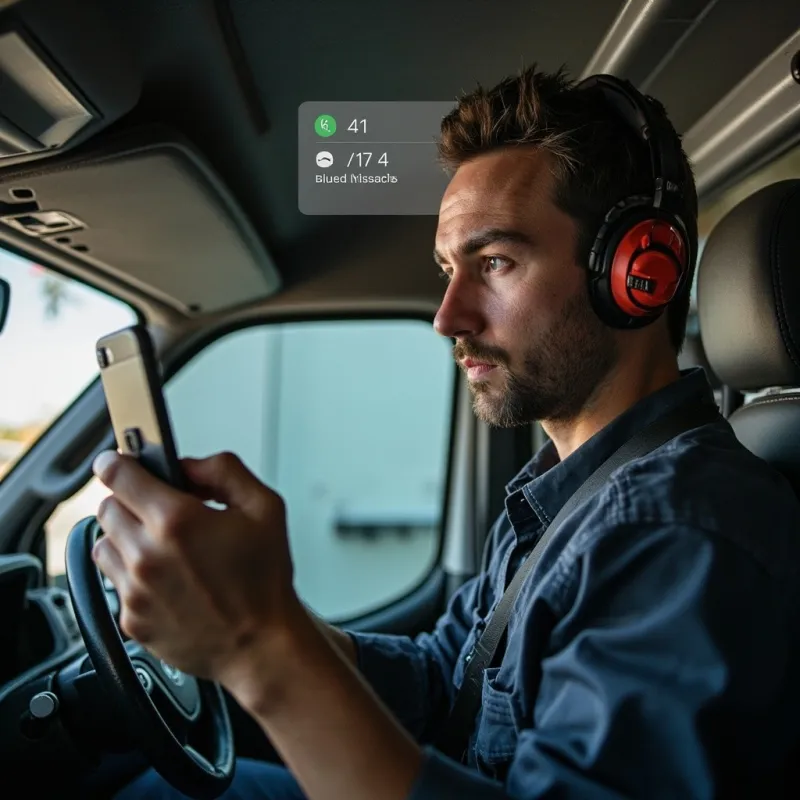
Photo: tradesperson answering phone in van morning, via images.splitshire.com
Last Tuesday, at about twenty past eight in the morning, our phone rang. Nothing unusual in that — but it occurred to me afterwards that most customers have no idea what happens on our end of that call. So I thought I'd walk you through it, using that very enquiry as an example, names changed because Mrs K from over the hill probably doesn't want her leaking tap to be famous.
8:20am — someone human answers
There's no switchboard, no menu of options ('press one for taps'), no hold music. When you ring BJ & H during working hours, you get one of us. Usually it's me or my wife; sometimes it's whoever's nearest the phone with clean hands.
Mrs K explained she had a tap that had started dripping properly overnight and she wanted it sorted before it became a ceiling problem. Total call time so far: about forty seconds, and we already knew roughly what we were dealing with.
Here's the bit that surprises people: we could tell her when we could come. Not 'someone will be in touch' — an actual day. Because the person answering the phone is the same person who knows what's in the diary.
The bit where we ask more questions than you expect
A good enquiry call is a two-way thing. Yes, we asked about the tap — make, when it started, whether it dripped constantly or in fits. But we also asked things that save everyone time later:
- Is there parking nearby, or do we need to factor in a walk with the kit?
- Anyone in the house, pets, access arrangements for if you're out?
- Is this the only job, or are there a couple of little things we could look at while we're there?
That last question is a family-firm habit. If a job takes twenty minutes, it's often worth ticking off a second small job in the same visit. It works out better for the customer and it means fewer return trips burning fuel across the county.
8:31am — pencilled in, properly
By eleven minutes after the call started, Mrs K was in the diary for Thursday morning. Not a vague 'Thursday-ish' — a slot, with a rough arrival window we stick to. We take details once, and we don't ask for them again.
Then a confirmation text went out before I'd finished my tea. Not an automated system — I typed it, which takes ninety seconds, but it means the details on her phone are the details in my head. If something's wrong, she can reply to an actual person.
What happens between booking and the visit
The night before, we look at tomorrow's jobs as a family, over dinner more often than not. Kit gets loaded the evening before: the likely parts, the consumables, the spare fittings that save a second trip. For a tap job, that's washers, ceramic cartridges in the common sizes, a couple of flexible connectors.
This is the unglamorous operational stuff that a big call centre can't replicate, because the person booking the job and the person doing the job are the same people. Nothing gets lost in translation between a customer service rep in one city and an engineer in another. There is no translation. There's just us.
Thursday, 9:04am — the visit itself
We arrived within the window we'd promised, because we'd planned the route around it. Mrs K showed us the tap, we got on with it, and while we were there we noticed her stopcock was stiff — so we freed that off too, no charge, because it took two minutes and it's the kind of thing that saves a panicked call at 11pm one day.
Payment was straightforward, quoted up front, no surprises. And when she texted a fortnight later about a different job entirely, she rang the same number and got the same people, who already knew her house, her dog and her parking situation.
Why we're telling you all this
Because 'personal service' has become a marketing phrase that's had the meaning worn off it. This is what it actually looks like in practice: short calls, real diaries, one set of details, people who turn up knowing why they're there.
If you're deciding between a family firm and a national outfit for your next job, don't ask who's cheaper on paper. Ask who can tell you, on the first phone call, when they'll be at your door — and whether the person who answers will be the person who knocks.