Buy It Once: The 50-Year-Old Kit That Still Earns Its Keep
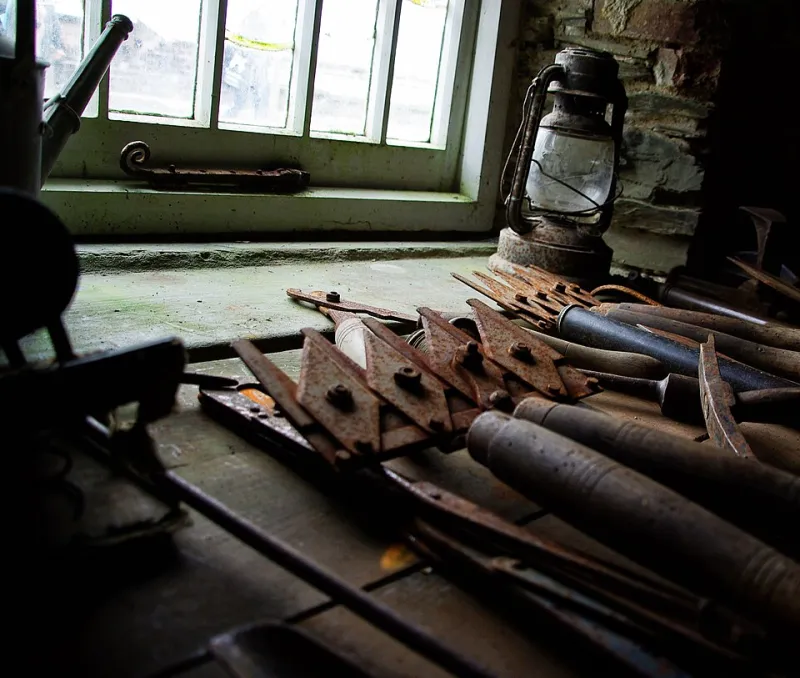
Photo: Harry Small, CC BY 3.0, via Wikimedia Commons
There's a spirit level hanging in our workshop that's older than the van it rides in. Older than two vans, actually. My grandad bought it in the mid-seventies from a hardware shop in town that's long since become a phone shop, then a coffee shop, then something else entirely. The bubble still sits dead centre every time. We've never had to adjust it.
That level has outlived three sets of kitchen units in our own homes, a garage conversion, a few hundred jobs and, frankly, a fair few fads. And every so often, when a job's running long and the light's going, one of us will hold it up, squint at the bubble, and say the same thing: they don't make them like that anymore.
Except they do. You just have to want to find them.
What 'buy it once' really means
The phrase gets banded about a lot online, usually next to a photo of an expensive hand plane or a cast iron pan. But in a trade context, buying it once isn't about spending more for the sake of it. It's about the maths over a lifetime.
A cheap cordless drill might cost £40 and last two years of proper use. A good one might cost three times that and still be going in fifteen. Add up the replacements, the downtime when something packs up mid-job, the battery ecosystem you end up locked into — and the 'expensive' option quietly becomes the frugal one.
Grandad understood this without ever using the word 'value'. He was a post-war kid; things were mended, not replaced. When he did splash out on kit, he bought the best he could afford and then looked after it. Chisels got sharpened. Saws got cleaned. Everything had a place, and woe betide anyone who didn't put it back.
We've kept that habit. Not out of sentimentality — well, not only out of sentimentality — but because it works.
The tools that never left
Ask anyone in our family what's in the bottom of the toolbox and you'll get a similar list:
- The 1970s spirit level — mentioned above, still undefeated.
- A set of chisels with handles worn smooth — my dad's dad's, resharpened so many times the blades are now half their original length. They cut cleaner than most new ones I've handled.
- A folding wooden rule — yes, we have lasers, but the rule comes out for quick internal measurements and it's never once needed new batteries.
- A claw hammer with a hickory handle — replaced twice in fifty years, which sounds like a failure until you learn the head has been re-hafted rather than binned.
None of this is a museum piece situation. These tools earn their keep weekly. That's the point. Quality kit isn't a display; it's a working inheritance.
There's a lesson in there for anyone, tradesperson or not: the most sustainable purchase is usually the second-hand one that's already proven itself. The chisels have outlived their maker's warranty by about four decades.
Why this matters to you, the customer
Here's the practical bit. When a tradesperson turns up at your door, their kit tells you something before they've said a word.
I'm not saying you should judge anyone on having shiny new everything — some excellent tradespeople run well-worn gear. But look for cared for. A toolbox with order in it. A level that isn't bent. Blades that have seen a sharpening stone. Cable wrapped properly rather than shoved in a ball.
Cared-for tools usually mean a cared-for approach. Someone who maintains their kit tends to maintain their standards. It's not a perfect correlation, but after decades on jobs, I'd say it's a strong one.
Conversely, be a bit wary of the opposite extreme: someone whose entire setup looks brand new, price tags practically still on. Sometimes that's a genuine professional with a recent investment. Sometimes it's someone who buys cheap, burns through gear, and quietly adds the replacement cost to their quotes. You're paying for it either way — the only question is whether the money went into the tool or the landfill.
A note on knowing when to upgrade
I'll admit we're not complete Luddites. Grandad's kit sits alongside modern kit for a reason. Our laser level gets the big layouts done in a fraction of the time the old plumb bob would take. Battery tools have genuinely improved site safety — no trailing leads across a kitchen floor.
The trick is knowing what a new tool is for. We buy modern kit when it makes the job safer, faster or more accurate. We keep the old kit because it still does its job better than anything we've found to replace it. Both can be true. The mistake is upgrading for the sake of it, or keeping old for the sake of it.
Buy it once doesn't mean never buy again. It means buy deliberately, maintain properly, and let the tool tell you when it's finished. Grandad's level hasn't told us yet. I suspect it's got another fifty years in it — though I doubt I'll be the one holding it. That'll be someone else's problem, and honestly, I hope a good one.